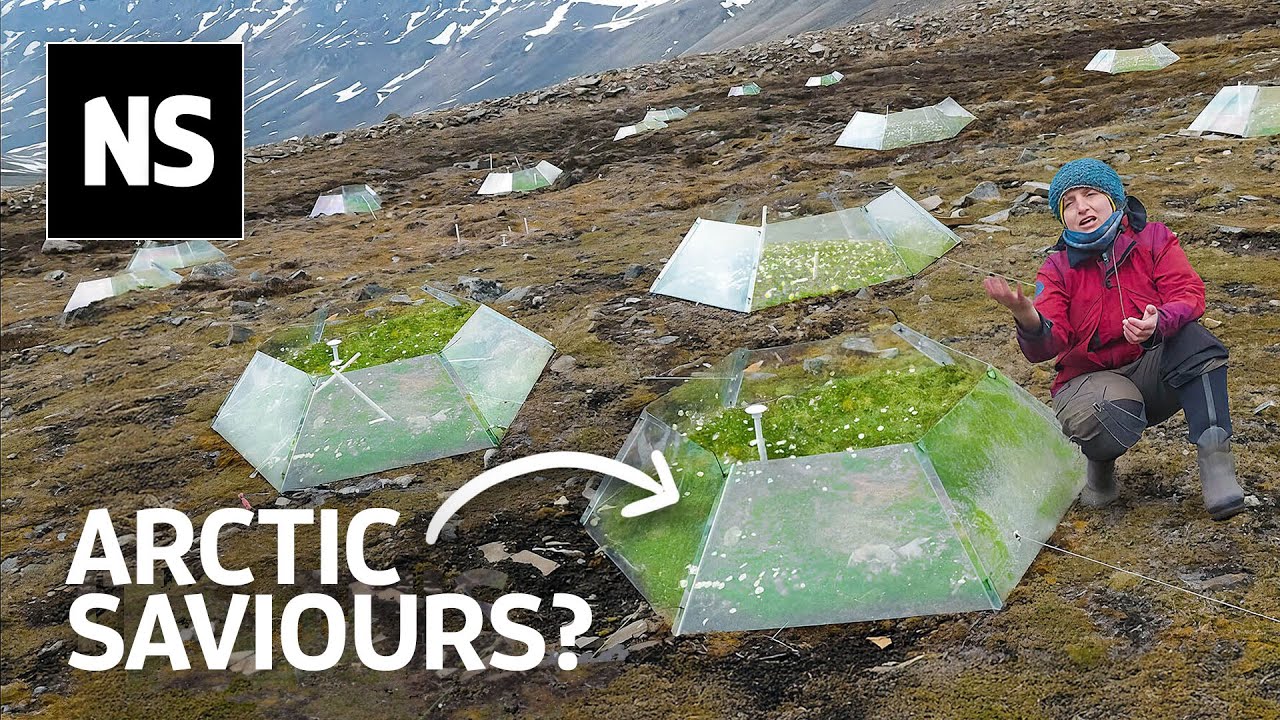
The Arctic is the fastest-warming place on Earth, resulting in hugely detrimental effects that extend far beyond the polar region. Temperature increase is causing the permanently frozen ground, known as permafrost, to thaw, releasing locked-up greenhouse gases such as carbon and methane. But as more soil becomes available and temperatures increase, so, too, does vegetation, in what is known as Arctic greening. “Over time, we can clearly see a development to a greener tundra,” says Simone Lang, an Arctic terrestrial biologist at the University Centre in Svalbard (UNIS), who looks after part of a 22-year-old research project called the International Tundra Experiment that explores the impacts of greening in Svalbard, as well as other Arctic vegetation projects.
But the picture is complicated, she says. In the short term, increased vegetation has an insulating effect that could buffer the effects of warming and protect the permafrost. This, Lang argues, needs to be modelled so we can understand and predict the future more accurately. But with the Arctic warming almost four times faster than other places, this process ultimately “cannot counteract the amplification and warming that we’re experiencing today”, she says.
–
Learn more ➤ https://www.newscientist.com/video/2188482-isla-myers-smith-climate-change-and-the-greening-of-the-arctic/
Subscribe ➤ https://bit.ly/NSYTSUBS
Get more from New Scientist:
Official website: https://bit.ly/NSYTHP
Facebook: https://bit.ly/NSYTFB
Twitter: https://bit.ly/NSYTTW
Instagram: https://bit.ly/NSYTINSTA
LinkedIn: https://bit.ly/NSYTLIN
About New Scientist:
New Scientist was founded in 1956 for “all those interested in scientific discovery and its social consequences”. Today our website, videos, newsletters, app, podcast and print magazine cover the world’s most important, exciting and entertaining science news as well as asking the big-picture questions about life, the universe, and what it means to be human.
New Scientist
https://www.newscientist.com/